
Ready to learn about local ecology!
What's this?
River's Park Edge and its partners are pleased to offer all visitors a fun, educational challenge to locate ecological clues thoughout the park.
Learn more
North American beaver
Castor canadensis
North American beavers are remarkable animals known for their ability to shape the landscape. They are North America’s largest member of the rodent family, weighing between 25 and 90 pounds. While they are nocturnal, beaver activity often starts in the early evening when you are most likely to see them along the river.
Scroll to learn more
Prev NextWhat else can I find?
River's Park Edge is home to many points of interest. But if you found this information interesting, keep seeking out more clues.
Seek for more ecology clues
Strictly herbivores, beavers use their strong teeth and powerful jaws to cut down trees for food.
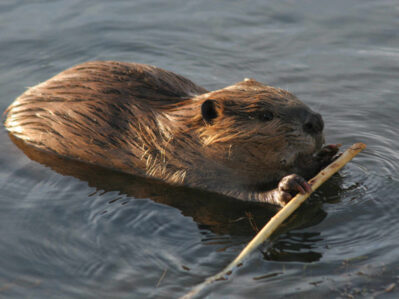
The leaves, and inner bark, or cambium, are a nutritious food source. Their favorites are cottonwood and willow. The industrious beaver will then use the downed trees to build dams along streams and rivers, creating ponds and wetlands that provide them with protection from predators.
These ponds create important habitat for a diverse array of wildlife. They also improve water quality, reduce erosion, recharge groundwater, and even help mitigate flooding by slowing and storing water during heavy rains and snow melt, making beavers important allies for healthy ecosystems.
Active all year long, beavers live in lodges made of sticks and mud, with underwater entrances. Families work together to care for young, called kits, teaching them the skills they need to survive. The young will stay with their parents for about two years, learning essential life skills before moving out to start their own families.
Next time you see a pond or a beaver-felled tree near water, take a moment to appreciate the hard work of these amazing ecosystem engineers.