
Ready to learn about local ecology!
What's this?
River's Park Edge and its partners are pleased to offer all visitors a fun, educational challenge to locate ecological clues thoughout the park.
Learn more
Rivers
Be still and listen for a moment…can you hear the river?
You are listening to the Missouri River. This river reaches over 2,500 miles and flows into the Mississippi River. The Mississippi-Missouri River system is the fourth longest in the world!
Scroll to learn more
Prev NextWhat else can I find?
River's Park Edge is home to many points of interest. But if you found this information interesting, keep seeking out more clues.
Seek for more ecology clues
Iowa is known as the land between two rivers, with numerous rivers, streams, and creeks braided throughout the state.
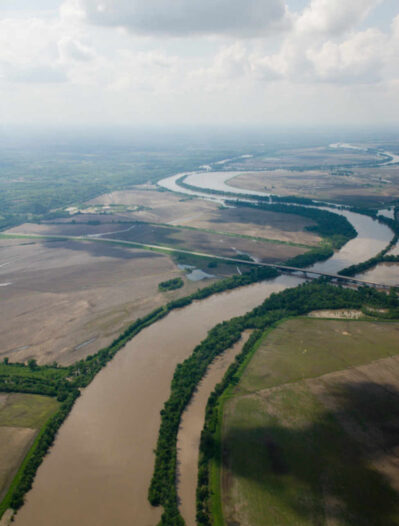
These flowing bodies of freshwater are driven by gravity and fed by rain, snowmelt, and groundwater. A river’s job is to carry excess water across the landscape. A river is more than a line on the map; it is a dynamic living system that has its own set of rules, story, and history.
The path – or channel – a river takes is driven by the land, and in return rivers reshape the land around them. When water flows with enough speed, it can dislodge and carry sediment. This is called erosion. The sediment is transported downstream until the water slows to a point at which it cannot carry it any longer, called deposition.
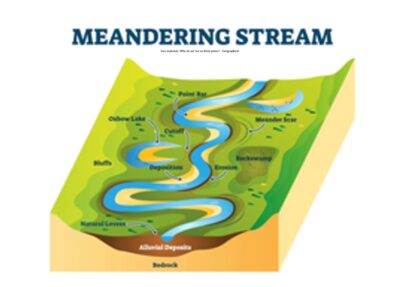
Notice the river’s flow or current. It is not the same speed from bank to bank. The difference in speed causes uneven sediment erosion and deposition, which causes the river to bend or meander.
During high water events, rivers can change course in a process called avulsion, carving new channels and shaping the surrounding floodplain – the river’s “dance floor.” Floodplains are flat, low-lying areas formed and shaped over time by the river’s natural processes. Intact natural floodplains act as water filters and protect water quality, they also allow water to spread out and slow down, reducing flooding effects downstream.